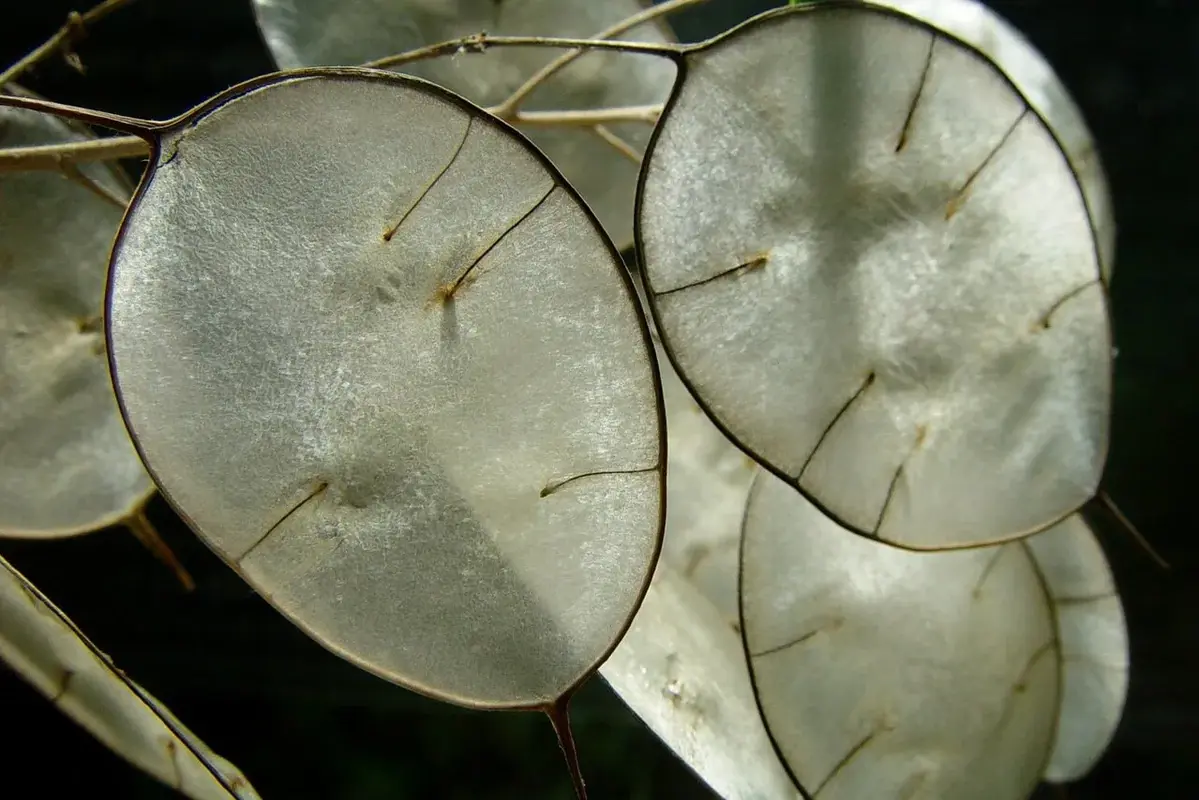
A bunch of honesty has dry brownish disks, not the translucent silver coins seen in finished arrangements. The silver surface is inside the seed case. Reaching it means removing outer layers while retaining a delicate central partition, not polishing the outside or scraping the whole disk clean. This guide works alongside the catching loose seeds while handling dried pods so you can separate the first observation from the next action.
Dry case rather than fleshy green pod
A green flexible case is not ready for the same delicate separation as a dry papery one.
Outer covers and central partition
The retained silver part is a structural membrane, not a powdery coating that needs rubbing brighter.
Thin stalk joining each disk
Support locally so pressure on one pod does not travel through and snap its neighboring stalks.
Dry neutral-smelling material
Musty odor, fuzzy growth or soft damp patches are reasons to reject material rather than hide it in a finished bunch.
Read the evidence before acting
A measured care sequence
- 01Dry before the finishing work
Keep sound stems spaced in a dry ventilated place, away from direct heaters and flames. Inspect the pod stalks and stem as well as the broad disks before starting.
- 02Practice on one spare pod
Hold it gently by the supported edge rather than pressing its center flat. Try a small movement at an already separating outer edge; stop if substantial pressure is needed.
- 03Remove only the expendable layers
Let the outer covers and seeds fall onto paper. Turn the supported pod to inspect the other face, preserving the fine frame and central membrane instead of seeking a perfectly polished surface.
- 04Store without overlapping the disks
Lay finished stems in a shallow rigid box with enough clearance that silver surfaces do not scrape one another. Label the material and contain collected seeds rather than scattering them outdoors.
Keep, adjust or remove?
- Dry case rather than fleshy green podA green flexible case is not ready for the same delicate separation as a dry papery one.
- Outer covers and central partitionThe retained silver part is a structural membrane, not a powdery coating that needs rubbing brighter.
- Thin stalk joining each diskSupport locally so pressure on one pod does not travel through and snap its neighboring stalks.
- Dry neutral-smelling materialMusty odor, fuzzy growth or soft damp patches are reasons to reject material rather than hide it in a finished bunch.
Keep the natural variation between disks and stop before perfection becomes damage. A few intact silver partitions contribute more to the arrangement than a full stem of torn rings; unfinished sound pods can remain as contrast. For a related symptom, return to the catching loose seeds while handling dried pods rather than applying several changes at once.
Research notes
Sources and editorial method
This guide turns general postharvest and preservation advice into visible household checks. Timing and thresholds are starting points: cultivar, harvest stage, transport, room humidity and vase condition can change how a particular flower responds.