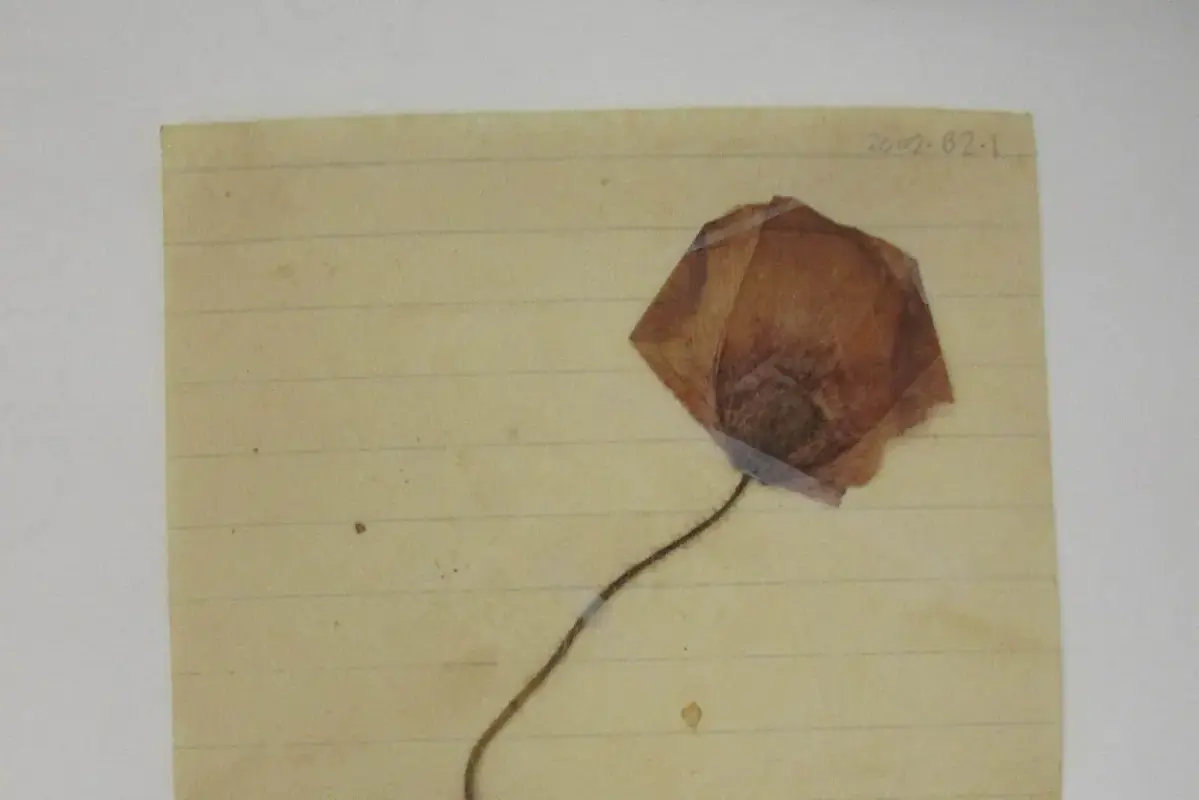
What belongs on a dried-flower specimen card? Record the best available plant name, material part, harvest date and stage, drying or preservation method, location, batch number and condition notes. The card should describe what happened, not invent a precise species or treatment result. This guide works alongside the dried-flower labelling guide so you can separate the first observation from the next action.
Name is verified or marked uncertain
An honest "unknown cultivar" is more useful than a confident wrong name.
Preservation route is recorded
Air-dried, pressed, silica-dried and glycerin-treated material behaves differently.
Harvest and completion dates exist
Dates help explain later fading, brittleness or moisture return.
Storage and inspection notes exist
Future handling depends on whether the batch was sound when boxed.
Read the evidence before acting
A measured care sequence
- 01Assign a batch ID
Use a short code that matches the storage box and photograph, not a vague label such as "summer flowers."
- 02Record harvest context
Write flower identity, part, date, stage and whether the material was fresh, wilted or already damaged.
- 03Record preservation
Name the method, products if known and completion date; mark uncertainty rather than filling gaps by guess.
- 04Attach without damage
Place the card in the box or beside the specimen, leaving delicate petals and stems free of adhesive.
Keep, adjust or remove?
- Name is verified or marked uncertainAn honest "unknown cultivar" is more useful than a confident wrong name.
- Preservation route is recordedAir-dried, pressed, silica-dried and glycerin-treated material behaves differently.
- Harvest and completion dates existDates help explain later fading, brittleness or moisture return.
- Storage and inspection notes existFuture handling depends on whether the batch was sound when boxed.
When the card is complete, store the material in a labelled rigid container and update it if insects, moisture or major fading appears. Good records make future care decisions smaller and safer. For a related symptom, return to the dried-flower labelling guide rather than applying several changes at once.
Research notes
Sources and editorial method
This guide turns general postharvest and preservation advice into visible household checks. Timing and thresholds are starting points: cultivar, harvest stage, transport, room humidity and vase condition can change how a particular flower responds.


