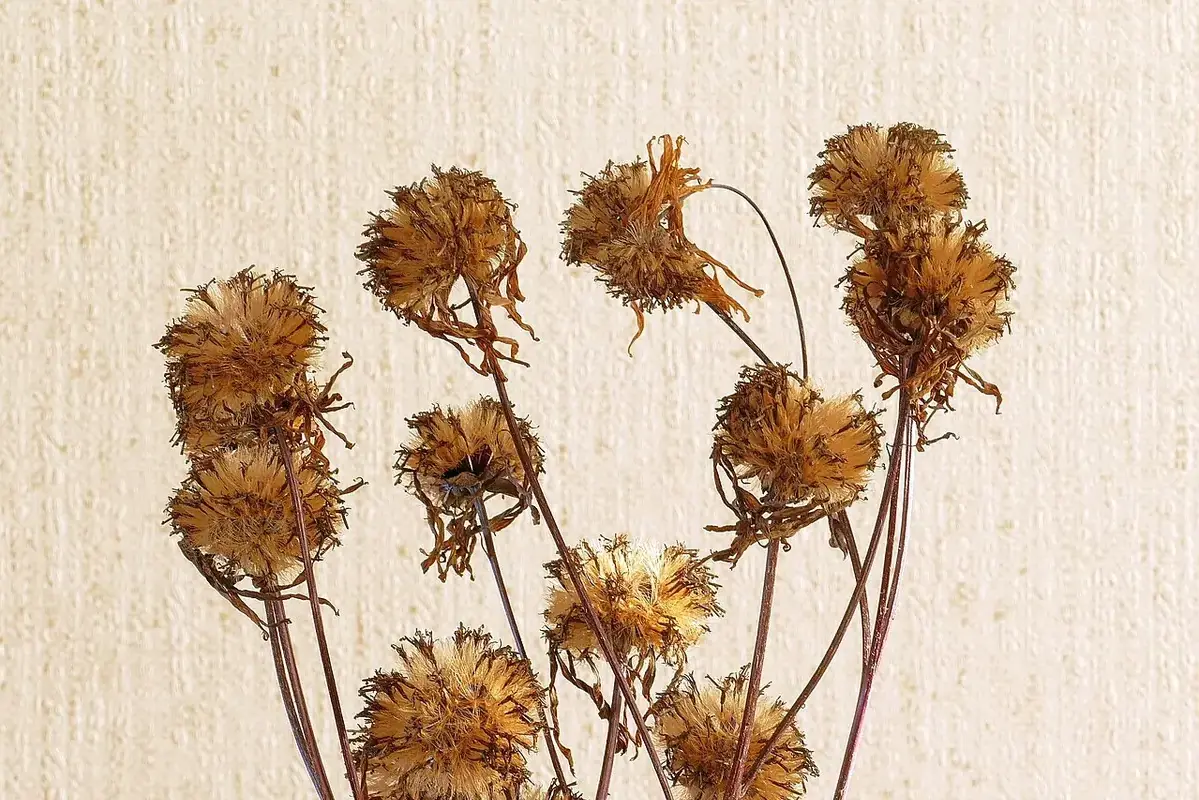
Microwave drying can remove moisture quickly, but it can also scorch petals, trap steam and destroy shape. Test one inexpensive flower with a compatible desiccant and short intervals; use air-drying or silica gel for thick or sentimental material. This guide works alongside the silica-gel drying guide so you can separate the first observation from the next action.
Thin or thick?
Thin petals tolerate a shorter experiment; dense heads hold steam and heat.
Can the shape be held?
A compatible desiccant supports the flower while moisture leaves.
Can you control it?
Short low-power intervals reduce the chance of scorching but do not guarantee success.
Can you replace it?
Do not make the first microwave trial on a sentimental or irreplaceable bloom.
Read the evidence before acting
A measured care sequence
- 01Choose a test flower
Use a spare bloom with no wire, foil, glitter, resin or unknown coating.
- 02Prepare a microwave-safe setup
Use a compatible desiccant and an open, labelled container that permits steam to escape.
- 03Run short intervals
Use low power, pause frequently and let the flower cool before touching or judging it.
- 04Finish by resting
Move the flower to a dry ventilated surface and inspect the centre after cooling; do not seal it while flexible.
Keep, adjust or remove?
- Thin or thick?Thin petals tolerate a shorter experiment; dense heads hold steam and heat.
- Can the shape be held?A compatible desiccant supports the flower while moisture leaves.
- Can you control it?Short low-power intervals reduce the chance of scorching but do not guarantee success.
- Can you replace it?Do not make the first microwave trial on a sentimental or irreplaceable bloom.
For shape-critical flowers, silica gel gives a slower and more inspectable route. If a microwave trial smells burnt, darkens rapidly or releases smoke, stop the appliance and discard the material safely. For a related symptom, return to the silica-gel drying guide rather than applying several changes at once.
Research notes
Sources and editorial method
This guide turns general postharvest and preservation advice into visible household checks. Timing and thresholds are starting points: cultivar, harvest stage, transport, room humidity and vase condition can change how a particular flower responds.


