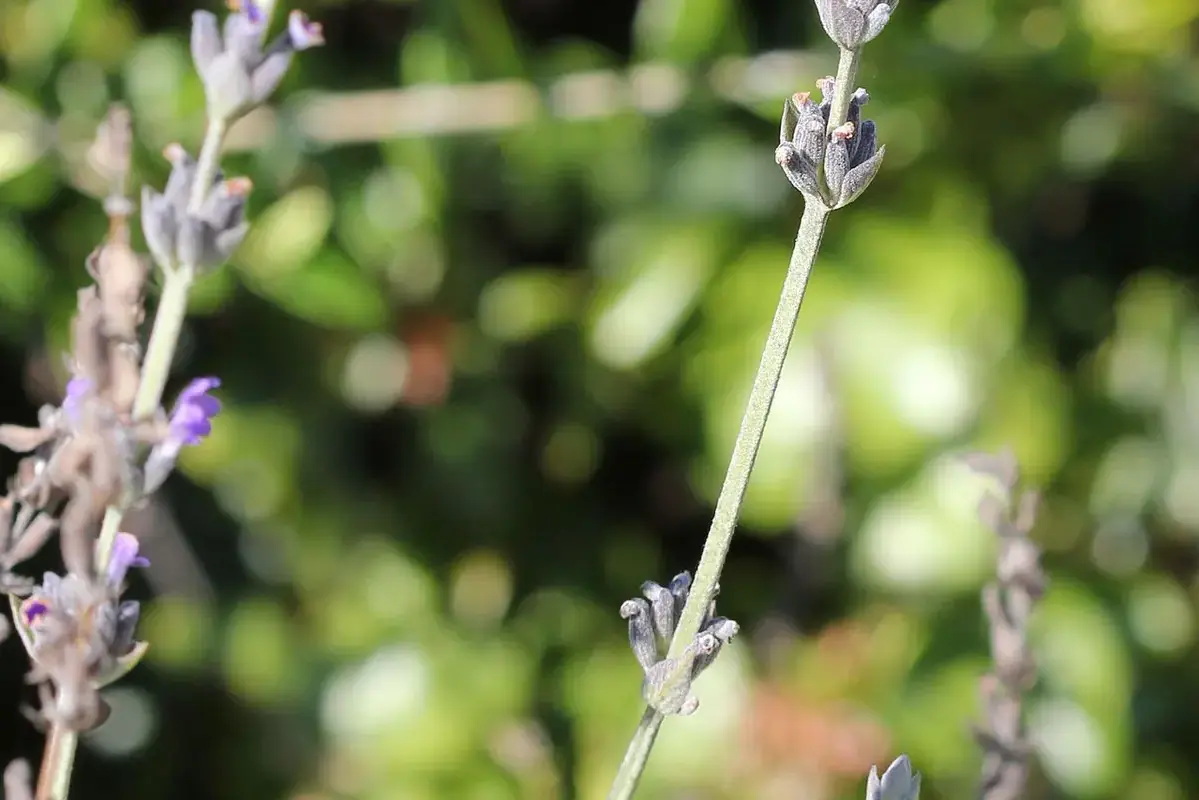
Fresh flowers forgive a careless lift because living tissue bends. Dried flowers do not. A stem can appear intact and still snap at the tie, a papery head can shed when two blooms rub, and a seed head can lose its silhouette from one sideways slide. For the next step, read the dried-flower storage guide.
Moving a preserved arrangement is therefore a support exercise. First identify where the weight travels; then give that route a surface that cannot shift. Do not begin by wrapping the flowers tightly.
Lower firm stem
Use it for a gentle grip if the stem is not cracked or hollowed by insects.
Branch junction
Support below it with tissue or a hand. Do not lift an arrangement by one side branch.
Petal and seed head
Keep fingers away from the face. A barrier should stop contact without pressing the head.
Tie and vase neck
Loosen a tight tie only on a padded surface and never pull a stuck stem through a narrow opening.
Move it in three stages
- 01Map the arrangement before touching it
Take front, side and top photographs. Note which stems cross and where the tie or vase supports the weight.
- 02Build a soft landing zone
Use clean acid-free tissue or plain paper on a table. Keep the new display or box open and ready before lifting.
- 03Lift from below the structure
Use two hands: one under the lower stems and one under the main flower mass. Keep the arrangement vertical if the stems were dried that way.
- 04Brace empty space, not petals
For a box, use loose rolls of tissue around the sides and under the base. Leave air around the heads.
- 05Unpack from the outside inward
Remove the box and barriers first, then free the base. Do not pull a trapped flower through the arrangement.
Choose the packing method by distance
Judge the result before grooming
- One floret fellKeep the arrangement if the structure is stable; do not brush every head to restore symmetry.
- A branch crackedSupport or remove that branch rather than bending it back into place.
- Dust appeared in the boxUse a soft brush later on the visible surface, not while the flowers are still being moved.
- Material feels cool or dampStop packing and return it to a dry ventilated area before storage.
Once the arrangement is stable, keep it away from direct sun, steam and repeated handling. If the piece is sentimental, take a high-quality photograph before the next move; a record is safer than trying to preserve every original angle.
Handling principle
Preservation continues after drying
Extension guidance recommends dry storage, protection from dust and careful handling because dried tissue becomes brittle. The packing sequence adds practical support points for household moves without promising that any brittle flower can survive repeated transport.


