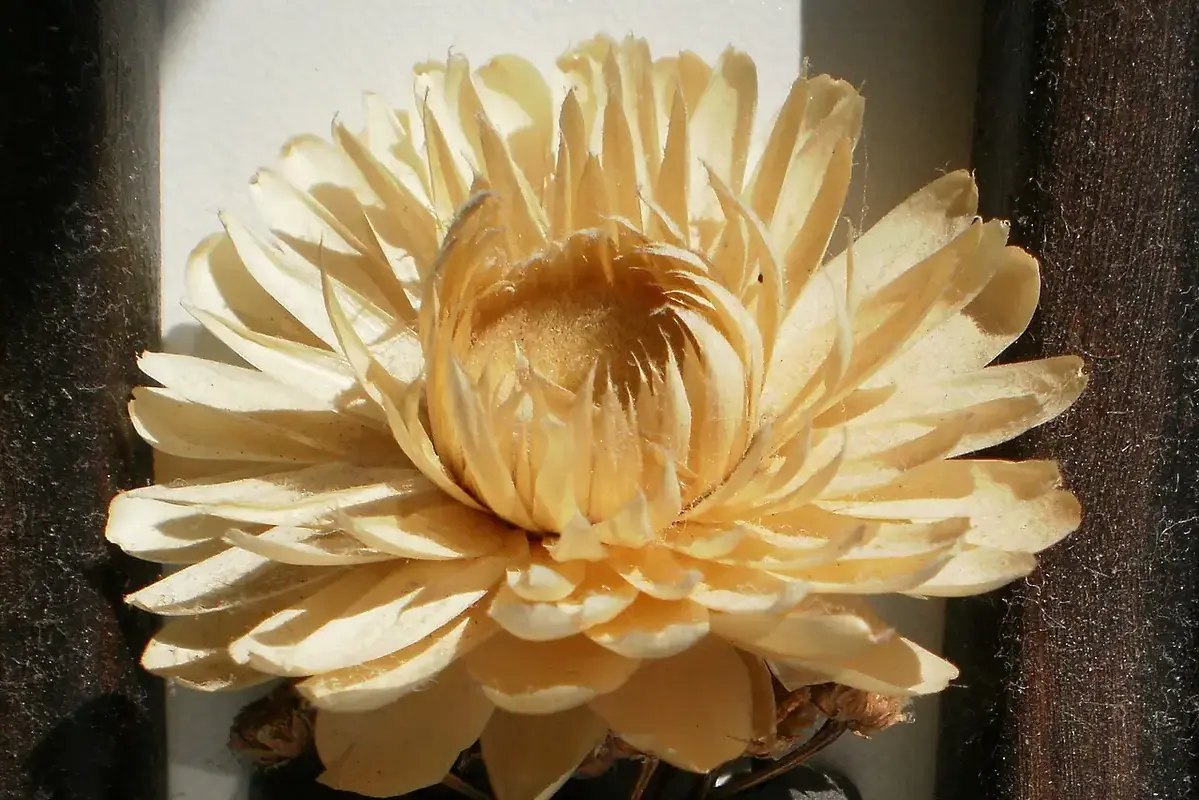
How can silica caught between petals be removed without breaking the flower? This guide works alongside the gentle dried-flower handling guide so you can separate the first observation from the next action.
Head still buried at the base
Pulling on the stem while the lower petals are trapped can tear them off.
Loose or embedded grain
A grain that moves freely needs less intervention than one piercing a petal.
Crisp or shattering tissue
Stop brushing when petal fragments appear on the tray.
Damp centre or dry centre
Residual moisture is a drying issue, not dirt to wash away.
Read the evidence before acting
A measured care sequence
- 01Prepare a catch tray
Work away from food and drafts, following the desiccant label for dust precautions.
- 02Uncover in layers
Spoon medium away from the edges until the flower is free; never yank it out by a projecting wire.
- 03Test one brush stroke
Touch an inconspicuous firm area with a clean soft brush. Continue only if grains move without petal loss.
- 04Inspect before boxing
Check the underside and centre, retain the drying record and store the flower with enough space that remaining grains cannot grind into neighbouring pieces.
Keep, adjust or remove?
- Head still buried at the basePulling on the stem while the lower petals are trapped can tear them off.
- Loose or embedded grainA grain that moves freely needs less intervention than one piercing a petal.
- Crisp or shattering tissueStop brushing when petal fragments appear on the tray.
- Damp centre or dry centreResidual moisture is a drying issue, not dirt to wash away.
Accept a little harmless-looking visible residue as a cosmetic compromise only when the material is identified and dry; do not sacrifice the flower for a perfectly clean surface. For a related symptom, return to the gentle dried-flower handling guide rather than applying several changes at once.
Research notes
Sources and editorial method
This guide turns general postharvest and preservation advice into visible household checks. Timing and thresholds are starting points: cultivar, harvest stage, transport, room humidity and vase condition can change how a particular flower responds.


