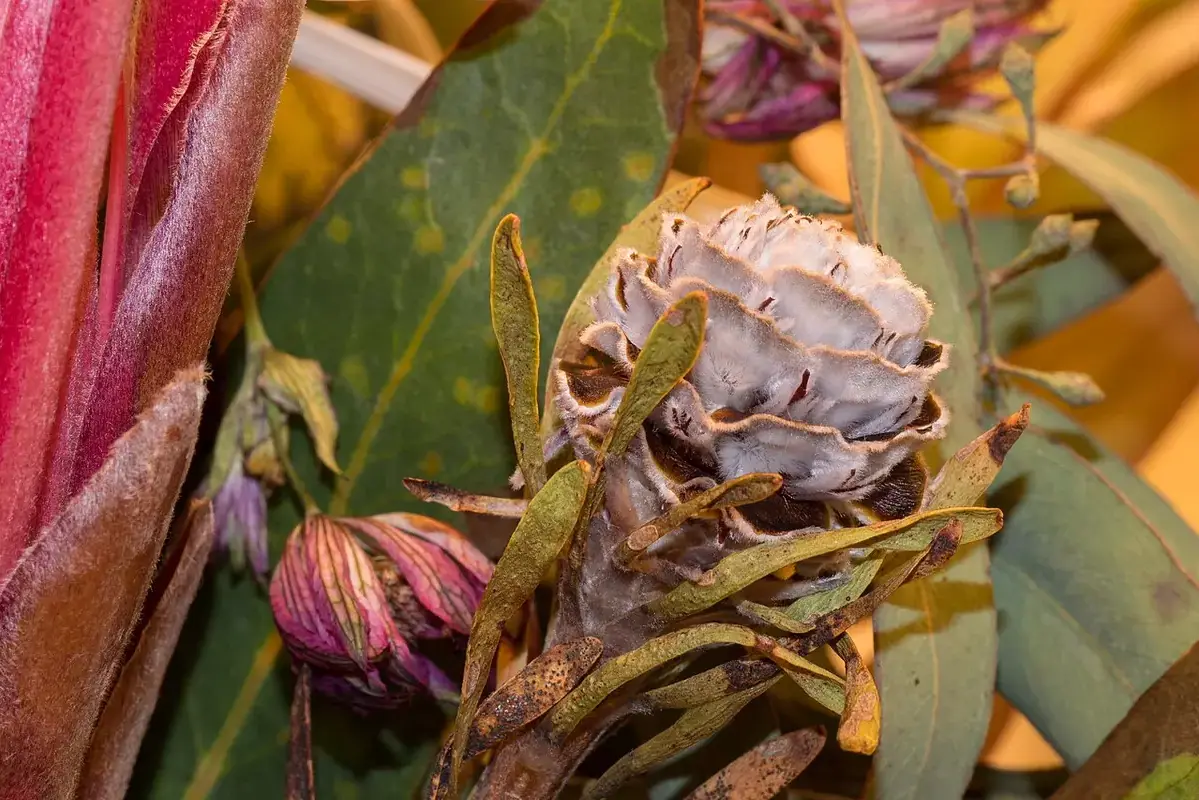
In a humid home, dried flowers need separation from steam and a container that can be inspected. Keep them away from bathrooms and kitchens, use loose archival tissue or a ventilated display case and check the centre of thick heads before sealing anything. This guide works alongside the air-drying candidate guide so you can separate the first observation from the next action.
Is steam frequent?
Bathrooms, kitchens and laundry areas repeatedly add moisture to plant material.
Is the head crisp inside?
Thick flowers can feel dry outside while retaining moisture at the centre.
Can air and inspection happen?
A rigid container protects shape, but tight sealing hides a problem.
Is there odour or fuzz?
Musty smell, soft patches or growth require isolation and safe removal.
Read the evidence before acting
A measured care sequence
- 01Choose the driest practical room
Use a hygrometer if available, but also observe condensation, laundry steam and musty odour.
- 02Check every thick head
Support the stem, feel the centre gently and leave any flexible material out of the storage box.
- 03Line a rigid box loosely
Use clean acid-free tissue as a barrier and spacer; do not press it onto the petals.
- 04Inspect on a schedule
Open the box after one week and again monthly for moisture, insects, odour or crushed stems.
Keep, adjust or remove?
- Is steam frequent?Bathrooms, kitchens and laundry areas repeatedly add moisture to plant material.
- Is the head crisp inside?Thick flowers can feel dry outside while retaining moisture at the centre.
- Can air and inspection happen?A rigid container protects shape, but tight sealing hides a problem.
- Is there odour or fuzz?Musty smell, soft patches or growth require isolation and safe removal.
If the home remains humid, display fewer fragile pieces and keep sentimental flowers in a ventilated case. Move anything that changes texture or smell before mould has a chance to spread. For a related symptom, return to the air-drying candidate guide rather than applying several changes at once.
Research notes
Sources and editorial method
This guide turns general postharvest and preservation advice into visible household checks. Timing and thresholds are starting points: cultivar, harvest stage, transport, room humidity and vase condition can change how a particular flower responds.


