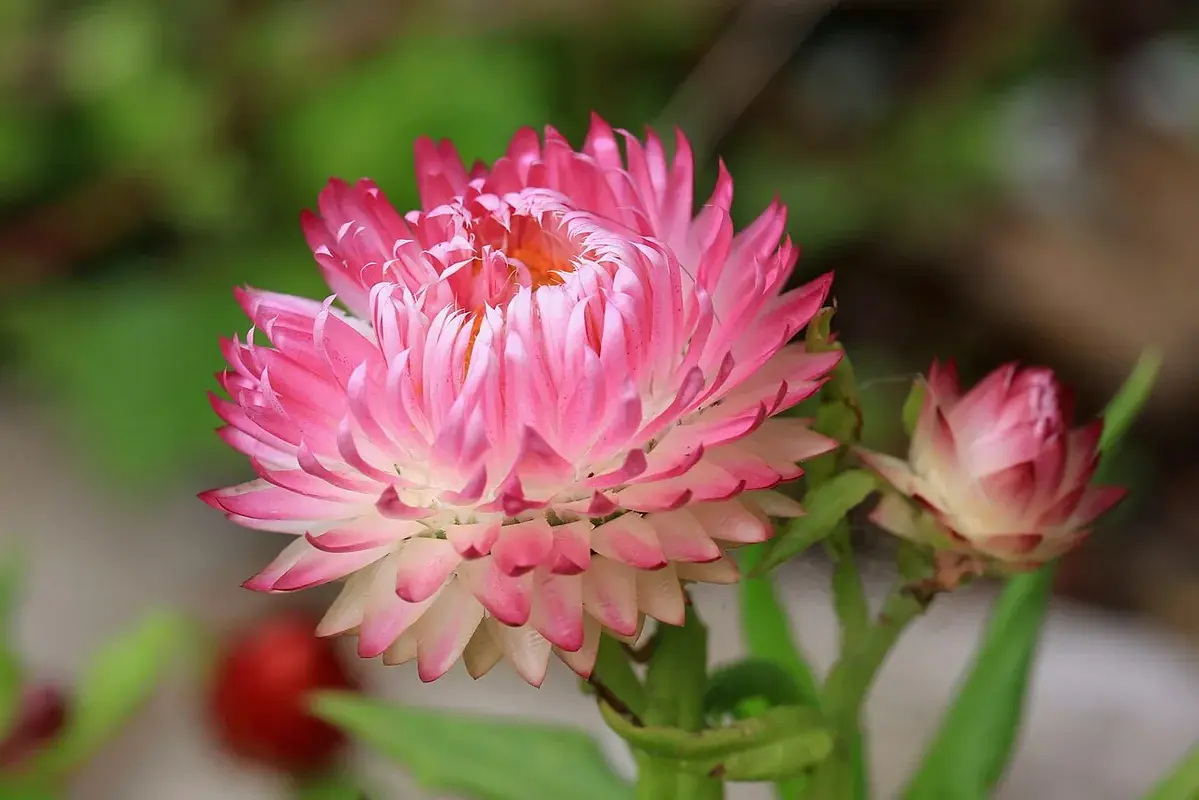
A freshly cut strawflower already crackles like a dried flower. Can it go straight into a closed keepsake box? The papery parts are bracts, and their texture does not prove the central flower tissue, receptacle or attached stem has finished drying. This is a preservation-readiness check, not a fresh-vase hydration problem. This guide works alongside the choosing structurally suitable flowers for air drying so you can separate the first observation from the next action.
Recognize a naturally papery structure
Crisp coloured bracts can be present while the plant is alive. Touching only their edges gives a misleading impression of whole-head dryness.
Check the outer rows and centre
For a compact dried shape, select heads with the outer bracts beginning to open while the centre remains tight. The head can continue opening during drying.
Inspect the receptacle and stem attachment
Look below the bracts for lingering softness or moisture. Do not crush the decorative head to test its densest part.
Keep heads from nesting together
Overlapping heads can hide a damp pocket even when the visible edges look finished. Give the underside and stem space rather than packing a large dense bunch.
Read the evidence before acting
A measured care sequence
- 01Select a representative group
Choose clean undamaged heads and keep a spare of similar size as a readiness reference. Remove leaves from stems intended for drying rather than placing the batch in a fresh-flower reservoir.
- 02Hang small separated groups
Support the stems and hang in a shaded dry ventilated place. Avoid a radiator, oven or sunny car; rapid surface crisping is not a reliable test of internal moisture.
- 03Inspect the hidden underside
During drying, look at the receptacle and stem attachment without pressing the bracts. If the largest heads remain soft, separate them and continue drying rather than sealing the whole batch on a calendar deadline.
- 04Enclose only a stable dry result
When the thick portions have dried and no decay is present, place heads in a rigid dry box with clearance above them. Check again after storage begins; new dampness or mustiness is a reason to remove and reassess the material.
Keep, adjust or remove?
- Recognize a naturally papery structureCrisp coloured bracts can be present while the plant is alive. Touching only their edges gives a misleading impression of whole-head dryness.
- Check the outer rows and centreFor a compact dried shape, select heads with the outer bracts beginning to open while the centre remains tight. The head can continue opening during drying.
- Inspect the receptacle and stem attachmentLook below the bracts for lingering softness or moisture. Do not crush the decorative head to test its densest part.
- Keep heads from nesting togetherOverlapping heads can hide a damp pocket even when the visible edges look finished. Give the underside and stem space rather than packing a large dense bunch.
The bracts tell you what strawflowers are like; the receptacle tells you more about whether this head is ready to store. Keep those checks separate and leave room for the slowest thick tissue to dry. For a related symptom, return to the choosing structurally suitable flowers for air drying rather than applying several changes at once.
Research notes
Sources and editorial method
This guide turns general postharvest and preservation advice into visible household checks. Timing and thresholds are starting points: cultivar, harvest stage, transport, room humidity and vase condition can change how a particular flower responds.