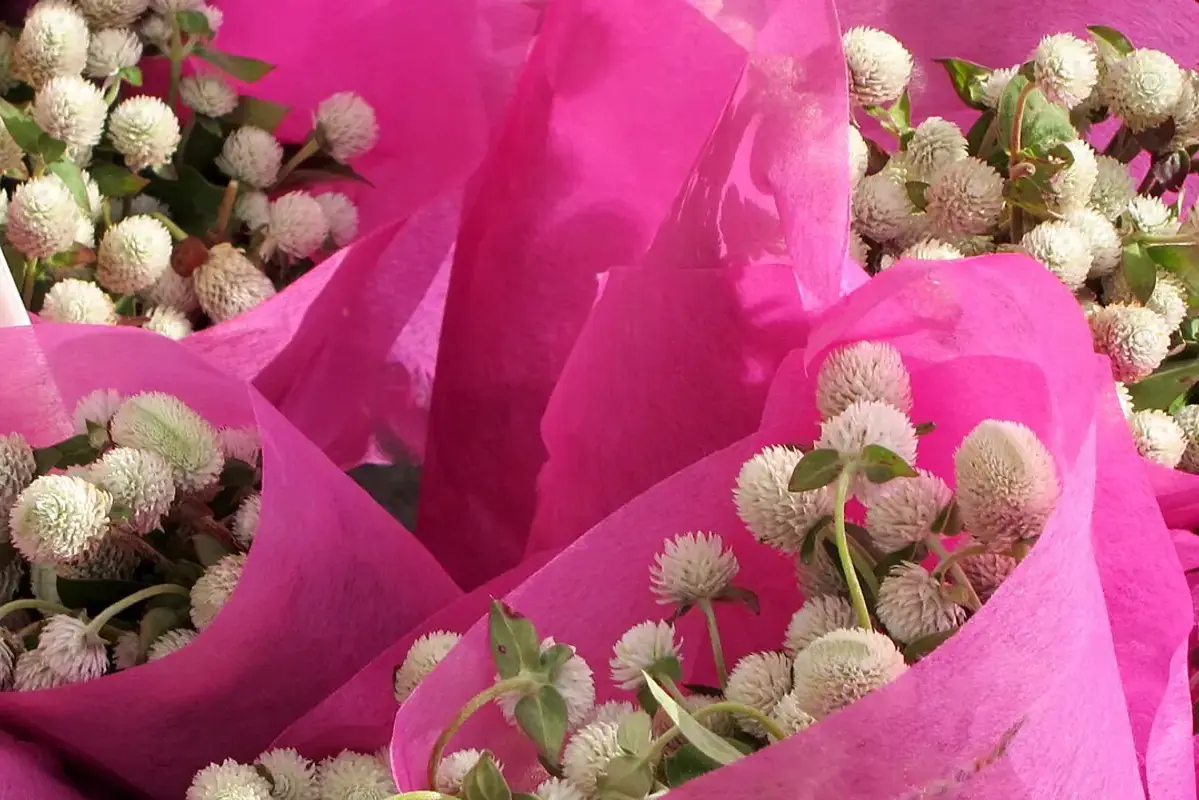
Why does the backing paper pick up colour even though the preserved flower is not sitting in water? This guide works alongside the dyed flower colour transfer guide so you can separate the first observation from the next action.
Dye, chalk or spray colour
Different treatments can leave colour on or within the tissue.
Marks where the flower rests
A matching contact outline suggests transfer rather than paper ageing alone.
Tackiness or local dampness
A changed storage environment can alter how treated material behaves.
Loose coloured dust
Movement during transport can make a stable-looking finish shed.
Read the evidence before acting
A measured care sequence
- 01Ask about the finish
Record whether the flower was dyed, chalked, sprayed or glycerin-preserved, including any available care instructions.
- 02Inspect the current support
Photograph stains before moving the flower, then lift it with stem-side support rather than dragging it across the paper.
- 03Test only spare material
Place a small offcut on a sample of the intended backing without wetting or vigorous rubbing; check for dry transfer over time.
- 04Separate in the final design
Use an independent support card or compartment with clearance from other specimens and retain the treatment note with the frame.
Keep, adjust or remove?
- Dye, chalk or spray colourDifferent treatments can leave colour on or within the tissue.
- Marks where the flower restsA matching contact outline suggests transfer rather than paper ageing alone.
- Tackiness or local dampnessA changed storage environment can alter how treated material behaves.
- Loose coloured dustMovement during transport can make a stable-looking finish shed.
Keep treated flowers identifiable and physically separate when uncertain. A replaceable backing is easier to change than a second stained keepsake. For a related symptom, return to the dyed flower colour transfer guide rather than applying several changes at once.
Research notes
Sources and editorial method
This guide turns general postharvest and preservation advice into visible household checks. Timing and thresholds are starting points: cultivar, harvest stage, transport, room humidity and vase condition can change how a particular flower responds.


